A Superintendent’s Story
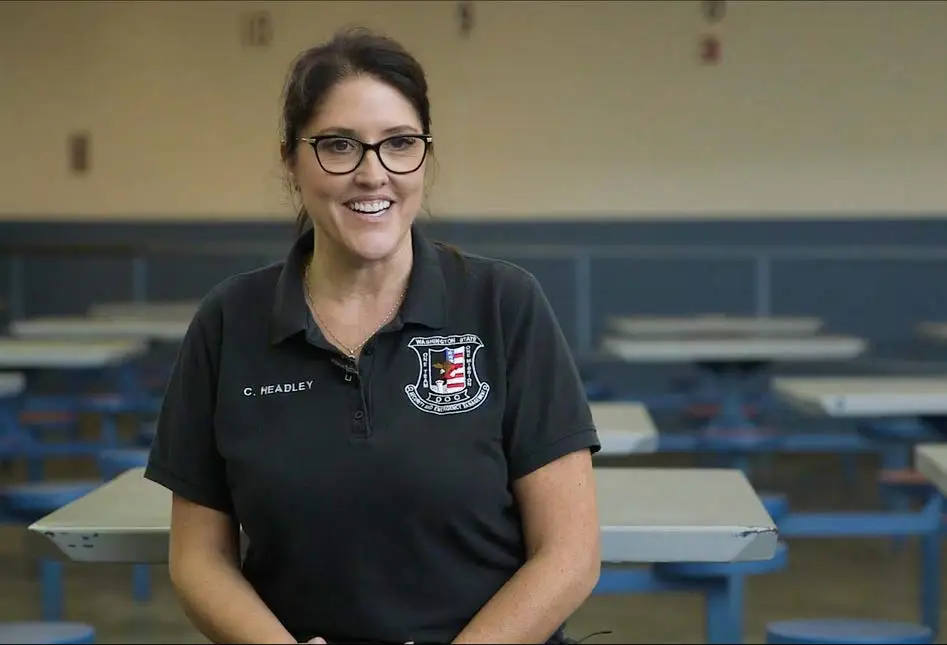
Superintendent Charlotte Headley has spent 26 years in the corrections field and has worked in six different prisons throughout Washington State. Her early career was heavily influenced by the challenging circumstance of being a woman correctional officer at men’s facilities. Superintendent Headley saw first-hand the toll a career in corrections took on her family and friends. “A lot of my friends and my family work in this business. After so many years, I’ve seen the impacts of this work and what it can do to mental health. I have lost friends and coworkers to arrest, addiction, premature death, and suicide — and I believe that this workplace created some of those rough patterns.”
Throughout her career, Superintendent Headley has always gravitated towards leaders who “were the most humanistic — with both our staff and our population.”
After so many years, I’ve seen the impacts of this work and what it can do to mental health. I have lost friends and coworkers to arrest, addiction, premature death, and suicide — and I believe that this workplace created some of those rough patterns.
-Charlotte Headley
One of her early mentors, Captain Jimmie Evans, insisted that officers sit down and eat with people who are incarcerated every week. “He used the meal time to gather intel, but really, it was all about building rapport.” This approach to humanistic security practices, also called ‘dynamic security,’ was years ahead of its time and left a lasting impact on her, teaching her the value of human connection in a system dominated by authority and control.
Amend’s Intervention
In 2021, the Washington Department of Corrections launched a partnership with Amend, which included trainings, workshops, and immersion programs in Norway for U.S. prison staff, a country known for its humanistic and evidence-based approach to running prisons. The collaboration led to the creation of the Washington Way in 2023, a more human-centered approach to prison work in Washington’s prisons. Drawing on her own evolution from a security-focused mindset to one that embraced and fortified humanity, Superintendent Headley was quick to support the Washington Way.
As a leader at the Washington Corrections Center for Women, Superintendent Headley has championed a variety of initiatives that reflect her commitment to a more humane approach including programs like community visits that are mentored by staff. For example, Superintendent Headley developed the first community visit for Leslie, a woman who had been incarcerated for 26 years, and who had approached Superintendent Headley with concerns about her readiness for her impending release. Recognizing the challenges Leslie was facing, Superintendent Headley received permission to take her on a series of staff-mentored and chaperoned community outings designed to help her acclimate to life outside prison walls.
The Outcomes
The outings with Leslie were transformative for both Leslie and for staff. Her first community visit was a nature walk and lunch at McDonald’s, where she used a touchscreen to order food for the first time.
Subsequent community visits included visits to a local church, and trips to the library and a grocery store, where she was able to buy ingredients and cook herself a meal for the first time in decades.
These mentored experiences were monumental in helping Leslie feel more prepared for her release in December 2024. The impact of these initiatives extends beyond Leslie to the entire prison community.
Superintendent Headley’s leadership has inspired staff to embrace a more humane approach, foster professional connections with people who are incarcerated, and support their reentry readiness. “I wanted to model it for the staff and show them it’s okay to make the investment,” Superintendent Headley explains.
What’s Next
Superintendent Headley is committed to expanding the Washington Way and other related initiatives at her prison. Plans are underway to build a coffee bar, where incarcerated individuals can train as baristas—a project that Superintendent Headley hopes will serve as both an incentive and a tool for making life at the maximum-security prison more similar to the “normal” outside community.
Amend aims to inspire, teach, and collaborate with prisons to adapt international best practices to their own environment. Superintendent Headley’s vision is a clear example that it is possible to create a correctional environment where safety and security coexist with humanity and compassion, ultimately leading to better outcomes for everyone involved.