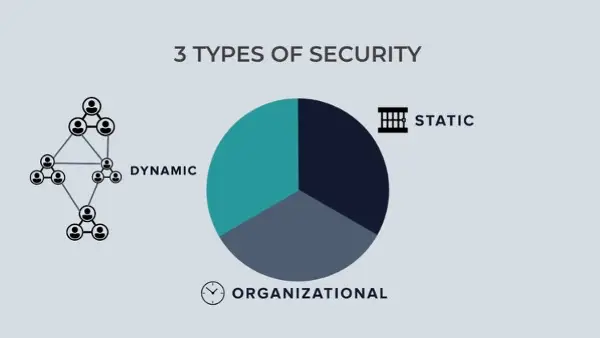
Safety and security in correctional institutions is founded on three foundational pillars: static security, organizational security, anddynamic security.
Static security refers to infrastructure and technology designed to restrict and monitor movement, and organizational security refers to the processes and policies implemented by staff to maintain control and mitigate risk.
For too long, correctional institutions have operated under the belief that those measures alone were enough, creating environments of high tension and pressure where staff have little ability to anticipate conflict, and conditions that have led to the occupational health crisis now faced by the correctional profession.
Dynamic security fills that void and completes the security framework by giving staff the tools they need to understand, manage, and reduce risk. Dynamic security means having enough knowledge about the people in your custody to anticipate, understand, and de-escalate incidents before they occur. Knowledge that is achieved by empowering staff to build positive, professional, and communicative relationships with incarcerated people. Providing staff with critical insight into what’s happening within their facility and allowing them to identify behavior changes that indicate risk.
Through consistent, professional, interactions founded in respect, dynamic security also creates an environment that is significantly calmer and less adversarial, resulting in fewer animosity-based incidents, an environment that is dramatically more positive for staff to work in, and enabling incarcerated people to more productively engage with rehabilitative programming.